PL
PL 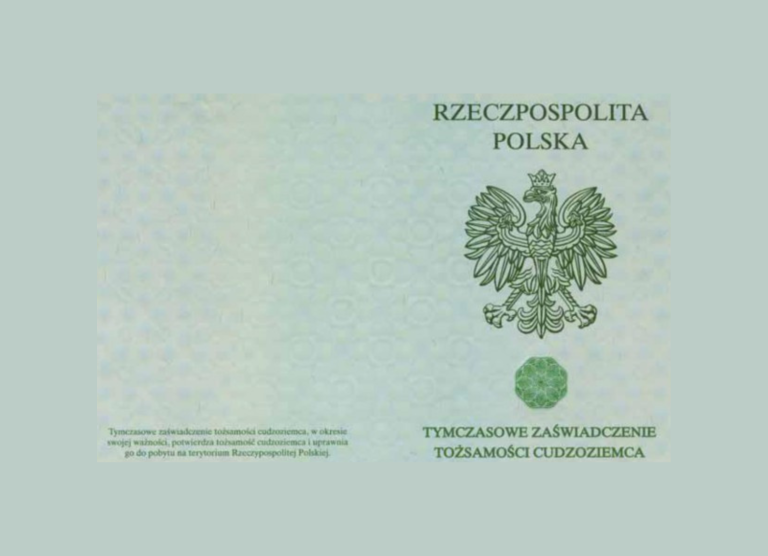

The Temporary Foreigner's Identity Certificate (TZTC) is a fundamental document used by people who apply for international protection in Poland. Its function is confirming the identity of a foreigner and bestowing upon them the right of legal stay on the territory of the Republic of Poland until their legal proceedings are closed via the final decision of the appropriate governmental body.
Issuing the document after an application was filed
After obtaining an application for international protection, the Border Guard is required to issue a temporary foreigner's identity certificate to the applicant as soon as it is possible, and no later than three days from the date of application. If the application also concerns the spouse of the applicant they are then eligible for the document.
The certificate is also provided to foreigners that are transfered to Poland under the provisions of the Dulbin III Regulation, if after the transfer they expressed interest in continuing the international protection procedure. In the case that the initial application also concerned the spouse of the applicant they are then eligible for the document.
If the application concerns underage children, the document issued to the parents or caretakers also applies to the children automatically. The guardian may request that a separate certificate be issued for a child that is at least 5 years old.
Validity of the document and subsequent certificates
A TZTC remains valid for a period of 90 days unless the foreigner in question has been transferred to Poland under the Dublin procedure, in which case the validity period is just 10 days. After that time has passed, the foreigner should immediately apply for a new certificate, that will be issued by the Chief of the Office for Foreigners and that has a validity period of 6 months.
According to the law there are still cases when the appropriate governmental body may refuse to issue a TZTC, e.g. when a proceeding for international protection has already closed via a final decision or in cases when a decision to refuse to take into account the declaration of intention to continue applying for protection was issued.
Information on the TZTC
A temporary foreigner's identity certificate includes basic information about the foreigner, such as name and surname, names of their parents, age or the date and place of birth as well as nationality. In the case that minords are included in the application, their personal details are also included in the TZTC. The certificate will contain a picture and a signature of the document holder and additionaly, it may also include the data in an encrypted form.
Responsibilities of the document holder
The act on granting protection to foreigners indicates that the foreigner is required to exchange their TZTC in the case that their personal details had changed, their child was born, the certificate was damaged or when other circumstances make it difficult to identify them. In the case that the foreigner has lost their certificate, the Chief of the Office for Foreigners must be notified within three days. A new TZTC will then be issued.
After the proceedings have finished with a final decision, the document holder is required to turn in their TZTC to the governmental body that has issued it. That can also be done at the moment of leaving Poland at the border, returning the document to the commander of the Border Guard outpost.
The importance of the certificate in everyday functioning of a foreigner
W praktyce TZTC ma zdecydowanie szersze znaczenie niż jedynie potwierdzenie tożsamości w postępowaniu uchodźczym. Jest to jedyny dokument, którym cudzoziemiec w procedurze może się legitymować, ponieważ paszporty podlegają zdeponowaniu. Dotyczy to zarówno formalnych kontaktów z organami państwa, jak i spraw życia codziennego, zwłaszcza odbioru korespondencji.
Osoby prowadzące postępowania administracyjne bez pełnomocnika otrzymują pisma listem poleconym. Aby odebrać korespondencję na poczcie, a dotyczy to również wypłat świadczeń pieniężnych, konieczne jest okazanie ważnego dokumentu potwierdzającego tożsamość. Brak ważnego TZTC może uniemożliwić odbiór pism mających wpływ na dalszy bieg postępowania.
Applying for a subsequent certificate
Po upływie ważności dokumentu cudzoziemiec powinien niezwłocznie złożyć wniosek o kolejne TZTC, który jest dostępny „tutaj” – https://www.gov.pl/web/udsc/wniosek-o-wymiane-tymczasowego-zaswiadczenia-tozsamosci-cudzoziemca. Wniosek można wysłać pocztą na adres Departamentu Postępowań Uchodźczych Urzędu do Spraw Cudzoziemców przy ul. Taborowej 33 w Warszawie lub złożyć osobiście w Biurze Podawczym.
Do wniosku należy dołączyć wypełniony formularz, jedną aktualną fotografię oraz kopię poprzedniego dokumentu (oryginał zostaw u siebie, ponieważ nowy dokument zostanie do Ciebie wysłany przesłany pocztą. Poczta wyda Ci list polecony, jeśli okażesz oryginał dokumentu tożsamości). Brak któregoś z tych elementów skutkuje wezwaniem do uzupełnienia braków w terminie siedmiu dni. Dokumenty sporządzone przez urząd są przesyłane wyłącznie pocztą, jednakże cudzoziemiec może zawnioskować o osobisty odbiór dokumentu w biurze UDSC.
Choć przepisy przewidują obowiązek niezwłocznego złożenia wniosku po upływie ważności dokumentu, w praktyce czas oczekiwania na wydanie kolejnego TZTC może sięgać nawet dwóch miesięcy. W tym okresie cudzoziemiec pozostaje bez ważnego dokumentu potwierdzającego tożsamość, co rodzi poważne trudności – m.in. brak możliwości odebrania korespondencji, potwierdzenia tożsamości czy przedstawienia dokumentu w placówkach medycznych lub pomocowych. Z perspektywy praktycznej warto przygotować wniosek z wyprzedzeniem i wysłać go przed upływem terminu ważności, tak aby maksymalnie skrócić przerwę w posiadaniu aktualnego dokumentu.
Ponieważ do wniosku należy dołączyć poprzednie zaświadczenie, rekomenduje się wykonanie jego skanu lub zdjęcia. Warto zrobić również kopię podpisanego wniosku oraz zachować potwierdzenie jego nadania na poczcie.
Podstawa prawna:
- Ustawa z dnia 13 czerwca 2003 r. o udzielaniu cudzoziemcom ochrony na terytorium Rzeczypospolitej Polskiej (Dz. U. z 2025 r. poz. 223, 389).